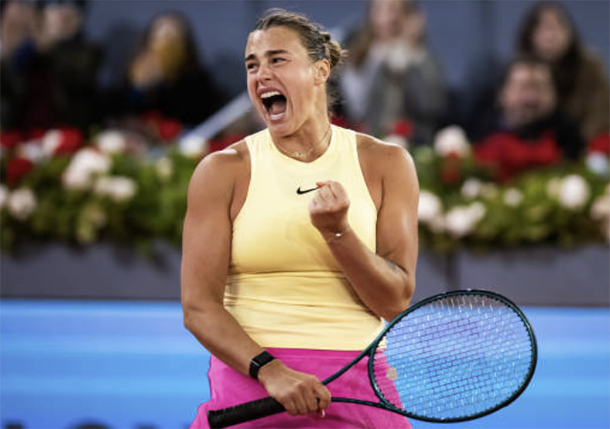
Sabalenka on RG Reaction: Completely Unprofessional

"I absolutely regret what I said back then," Aryna Sabalenka said of her controversial comments after losing the Roland Garros final.Aryna Sabalenka

By Richard Pagliaro | @Tennis_Now | Tuesday, June 17, 2025
Photo credit: Julien DeRosa-AFP-Getty

Reality has induced regret in Aryna Sabalenka.

World No. 1 Sabalenka calls her behavior after her Roland Garros final loss to Coco Gauff "completely unprofessional" and shared she wrote a letter to the two-time Grand Slam champion apologizing for her behavior.

Tennis Express

The US Open champion said while we all have bad days at work "the difference with me is…I get a lot more hate for what I did."

"I absolutely regret what I said back then," Sabalenka told Eurosport Germany. "You know, we all make mistakes. I’m just a human being who’s still learning in life. "I think we all have those days when we lose control.

"The difference with me is, the world is watching. I get a lot more hate for what I did than other people."

In the first French Open final between the world’s top two women in 12 years, No. 2 Gauff was simply too tough for No. 1 Sabalenka at crunch time.

A resilient Coco Gauff combated Sabalenka’s fierce power with pure poise pulling off a 6-7(5), 6-2, 6-4 comeback to capture her maiden Roland Garros championship in a thriller.

Afterward, the world’s best player called it her worst final.

“It was really honestly the worst tennis I've played in the last, I don't know, in the last I don't know how many month,” Sabalenka told the media in Paris afterward. “Conditions were terrible, and she simply was better in these conditions than me.

"I think it was the worst final I ever played.”

Sabalenka, who struggled to cope with whipping winds and an unrelenting Gauff's comprehensive court coverage, took criticism afterward for what some felt were ungracious and classless comments.

The top-seeded Sabalenka committed 70 unforced errors. Sabalenka said at times she felt the tennis universe was playing a cosmic joke on her with Gauff’s running retrievals turning her damaging drives into punch lines.

“I mean, honestly sometimes it felt like she was hitting the ball from the frame,” Sabalenka said. “Somehow magically the ball lands in the court, and you kind of, like, on the back foot.

“It felt like a joke, honestly, like somebody from above was just staying there laughing, like, let's see if you can handle this. And I couldn't today.”

Reflecting on her comments, Sabalenka said she was upset after a physically and emotionally draining defeat and spoke out of frustration.

Since then, Sabalenka said she has apologized to Gauff.

"I was super emotional and not very smart at that press conference," Sabalenka added. "It took me a while to revisit it, to approach it with open eyes, and to understand. I realized a lot about myself. Why did I lose so many finals? I kept getting so emotional.

"So I learned a lot. Above all, one thing: I’m the one who always treats my opponents with great respect - whether I win or lose.

"Without that respect, I wouldn’t be where I am today. So it was a tough but very instructive lesson for me."

Bublik on Shock Roland-Garros Win – “Sometimes in Life There’s Only One Chance.”

Alexander Bublik after surprising the tennis world, spoke with candor on reaching the Roland-Garros quarterfinals for the first time.Coach

By Erik Gudris | @atntennis | Monday, June 2, 2025
Photo Source: Roland-Garros Facebook

The mercurial, crowd-pleasing talents of Alexander Bublik has now earned him worldwide attention after his shock four-set upset win over No. 5 seed Jack Draper to reach the Roland-Garros quarterfinals for the first time in his career.

Bublik, 27, celebrated his unexpected 5-7, 6-3, 6-2, 6-4 victory with tears in his eyes as he became the first Kazakhstani man to reach a Grand Slam quarterfinal in history.

"Sometimes in life there's only one chance, and I had a feeling that that was mine, and I couldn't let it slip," Bublik said in an on-court interview, after an extended standing ovation from the Court Suzanne-Lenglen crowd. "Standing here, it's the best moment of my life, period."

The final game of the match proved pivotal in more ways than one. Draper, still down a service break at 5-4, forced Rublev to serve for the match. Draper battled and held two break points, only to lose out on both. Rublev eventually closed out the game, and the match.

But Rublev admitted later on TNT Sports, if he had lost that game, he would likely have lost the motivation to try and win the match from there.

“I said to myself, if I'm losing that break, it's 7-5 6-2 max (in favor of Draper)," Bublik said. "I'm not gonna fight, because if you have this chance to make your first ever quarterfinal and you blow it. It's your fault. That's how I see it.”

Bublik, known for his unorthodox playing style, including underhand serves and trick shots, and rather cavalier personality, both on and off the court was not expected to be in the mix this fortnight in Paris. Though he’s reached a career high World No. 17, he’s currently ranked at No. 62.

Despite winning four ATP Tour titles in his career, 2025 has been a rough season so far. Before Paris, Bublik was 7-13 on the year.

Yet Bublik must have felt something good was coming for him in Paris after he earned a two sets from behind victory over No. 9 seed Alex de Minaur earlier in the second round. Bublik admitted he contemplated quitting tennis earlier this season after falling to the low 80s ranking wise.

While he previously complained about the clay court swing being too long, this year, he realized he needed to make an effort on the dirt to boost his ranking.

“I was eighty in the world. I was talking to my coach I want to quit tennis because I’m eighty in the world. It feels disgraceful for me,” Bublik said. “So I just said to myself, you have a gift, you gotta use your chances. If I have one, I'm gonna use it.

"I'm just gonna fight. I'm gonna try to play on clay and see how it goes and it worked like this, Because I had no room, you know, to cry. Because if you have room to cry, I always would take the cry, you know.”

Bublik added, “But when you have no options then it's that's how it works.”

Many tennis observers have questioned Bublik’s efforts on-court and off court throughout his career.

While Bublik confirmed he works hard off the court, he’s the first to admit that he prefers a “work/life” balance that includes his family. He can only speak for himself when it comes to determining what’s best for his life and career.

“There is no way around hard work. Don't get me wrong,” Bublik said in his post-match press conference. “I work hard, but on my terms, you know. I do what I'm capable of doing with my body, but I will not push through a knee injury in order to have, you know, a certain chance to win a certain match. So for me, there is no way around hard work. I have been working very hard, and I do work very hard."

Bublik, a proud father, added on TNT he tries to put tennis into perspective

“Tennis is fifty percent of my life, you know I have other part of being a dad, being a friend, which is have the same importance for me as being a tennis player," Bublik said. "So in this percent that I have as a professional athlete, I have to do maximum what my body is capable of.

"I'm not going to put my health on the line. I'm not going to be fighting through injuries. You know, if I have pain, I resign. I say thank you very much. I'm not going there.

"Because I prioritize my health a lot. And if you tell me, Sasha, you gonna win a Slam. But you can't walk at forty. I'm not going to take this. So then I have to work with the tools I have.”

Bublik next faces World No. 1 Jannik Sinner in the quarterfinals.

Maximize Your Game on Green Clay Courts

Below is an extensive article outlining tips and strategies specifically for players who frequent green clay—or Har-Tru—tennis courts. This article delves into the unique characteristics of the surface and provides actionable advice to sharpen your game.

Mastering the Green Clay: Tips and Strategies for Har-Tru Tennis Courts

Green clay courts, often referred to as Har-Tru courts, offer a unique blend of the traditional clay feel with a speed that sets them apart from both conventional hard courts and red clay surfaces. Learning to adapt to these courts can elevate your performance and inject new life into your tactics. Below, we dive deep into the nuances of the surface and compile tips—from footwork and shot selection to equipment and mental toughness—that every dedicated player should know.

Understanding the Green Clay Surface

Green clay courts are prized for their slightly faster pace compared to red clay but still retain the inherent characteristics of clay surfaces. The green hue and composition provide a softer, yet consistent, bounce that promotes longer rallies and emphasizes the importance of endurance and strategy. Unlike rigid hard courts, green clay courts reward players who are patient and methodical, giving them the chance to build points wisely rather than relying on sheer power. The subtle differences in bounce and pace, influenced by moisture, dust, and court maintenance, make each match a unique puzzle awaiting the right solution.

Footwork and Movement: The Foundation of Success

One of the cornerstones of excelling on any clay surface is exceptional footwork. On green clay courts, you must cultivate the ability to slide into position with precision. Controlled sliding—not the reckless spin of a beginner—allows you to preserve balance and quickly reset for the next shot. Incorporate drills into your training regimen that focus on lateral movements and quick direction changes. For instance, using ladder drills or short sprints interleaved with sliding exercises can enhance your agility and reaction time on the surface. Proper sliding technique isn’t about covering as much ground as possible; it’s about positioning yourself efficiently while keeping your balance intact.

Shot Selection and Spin: The Art of the Rally

Due to the slower pace and softer bounce of green clay, the role of spin becomes paramount. Heavy topspin is your best friend on this surface. By brushing up on your topspin technique, you can control the trajectory and depth of your shots, ensuring that the ball dips rapidly as it crosses the net and bounces high enough to challenge your opponent’s timing. Mix in slices, lobs, and drop shots to keep your opponent off balance. Varying your shot selection not only disrupts your adversary’s rhythm but also forces them to cover the court more extensively. This strategy highlights the need for precision over power—a hallmark of successful clay court warriors.

Serving Strategies: Precision Over Power

While a big, fast serve is often celebrated on faster surfaces, green clay courts demand a more nuanced approach. Instead of serving with raw power, emphasize placement and variation. Target your opponent’s weaker angles or side and mix up your service speed and spin. A well-placed serve can set the tone early on, forcing your opponent to shift quickly and potentially mis-hits their return. Additionally, focus on developing a kick serve that makes the ball bounce unpredictably—forcing your opponent into uncomfortable positions and giving you the opportunity to control the point from the get-go.

Mental Toughness and Patience: Building Points Methodically

Success on green clay courts is built on the foundations of mental fortitude and patience. Points on clay often evolve slowly, with every shot carrying more significance. Embrace longer rallies as opportunities to outmaneuver your opponent rather than seeing them as wasted energy. Cultivate a mindset centered on constructing points methodically: wait for the right moment to attack, maintain your focus even during extended rallies, and consistently keep a cool head when the ball isn’t flying off the court at breakneck speed. This mental adjustment is key to turning long, strategic battles into eventual victories.

Adapting to Environmental Conditions

Green clay courts are particularly sensitive to environmental factors. Whether you’re playing indoors in a humid setting or outside with variable weather conditions, adjustments are necessary. Wet conditions, for instance, can make the surface stickier and the ball heavier, while dry conditions might lead to a faster pace or uncharacteristic bounces. Learn to read these cues quickly:

  • Warm-up thoroughly: Use your warm-up to gauge how the surface is behaving.
  • Adjust shot depth: Longer, looping shots with heavy spin might be necessary in heavy, wet conditions.
  • Stay observant: Monitor how the ball reacts and adapt your game plan accordingly during play.

Equipment and Footwear: Enhancing Court Grip

Your equipment, particularly footwear, plays a crucial role on green clay courts. Unlike hard courts where durability and shock absorption are prioritized, clay demands shoes with specialized traction. Investing in shoes with a traction-enhancing bottom can offer extra grip during slides and quick direction changes. Many experienced players even choose to bring a pair of their older, well-worn shoes as a backup solution to adapt to varying court conditions. The right footwear not only improves your sliding efficiency but also reduces the risk of injury.

Drills and Practice Routines for Clay Mastery

To truly master green clay, integrate drills that focus on the specific needs of the surface:

Drill CategoryTraining FocusPurpose
Footwork DrillsLadder drills, lateral shuffles, and controlled sliding practicesEnhance agility and precision during court movement
Spin DrillsRepetitive topspin and kick serve practiceDevelop consistent shot production and effective ball control
Rally ConstructionBaseline rally drills that emphasize patience and varied shot selectionBuild the capacity to construct points methodically
Reaction DrillsQuick change of direction and reflex exercisesImprove responsiveness to unpredictable ball bounces

Structured practice sessions that incorporate these drills can boost your overall performance by honing the skills most beneficial on green clay.

Adapting Strategies Against Different Opponents

No two opponents are alike, and green clay courts amplify the need to tailor your strategy on the fly. Scout your opponent early in the match to identify weaknesses—perhaps they struggle with high-bouncing topspin shots or are vulnerable when forced out of the court’s center. Adjust your tactics by playing to your strengths while exploiting your opponent’s deficiencies. For example, if you notice they’re slower in retrieving drop shots, mix those in to disrupt their rhythm. This adaptive approach is central to succeeding on a surface where every point is a battle of wits as much as of physical prowess.

Conclusion

Green clay courts offer a dynamic and strategic playing environment that rewards precision, adaptability, and mental toughness. By refining your footwork, mastering topspin and varied shot techniques, optimizing your serve, and adapting to the subtle influences of weather and court conditions, you can transform every match into an opportunity for mastery. The intricate dance of movement and strategy on these courts also ensures that with each match, you evolve not only as a player but as a strategist who learns to read the game more deeply.

Whether you’re a seasoned player or new to green clay, these tips and strategies can pave the way to improved performance and a more enjoyable game. Experiment, refine your techniques, and ultimately let the unique character of Har-Tru courts inspire a smarter, more deliberate style of play.

Further Exploration: Once you’ve integrated these strategies, consider reviewing match footage to analyze your court positioning and shot selection. Experiment with small adjustments in practice sessions—like altering the amount of spin or varying your slide approach—to fine-tune your game even further. The interplay between physical technique, mental toughness, and environmental adaptation is a rich field to explore, promising endless opportunities for growth and mastery on the green clay court.

Granby Tennis Club

Aryna Sabalenka: Quit Your Job

World No. 1 sends clear message to former coaches.Amanda Anisimova

By Richard Pagliaro | @Tennis_Now | Friday, May 30, 2025
Photo credit: Clive Brunskill/Getty

Tennis is an ongoing educational experience.

Today, Aryna Sabalenka schooled her skeptical teachers.

Tennis Express

World No. 1 Sabalenka tamed tricky lefty Olga Danilovic 6-2, 6-3 powering into the Roland Garros fourth round for the third straight year.

Three-time major champion Sabalenka, who improved to a Tour-best 37-6 in 2025, will face former French Open semifinalist Amanda Anisimova in a blockbuster fourth-round battle between two massive hitters.

Today, Sabalenka sent major message to coaches who slammed her as too “stupid” to make her mark as a pro: Quit your job.

Recalling junior coaches who questioned her mental strength, Sabalenka told those skeptics: You know nothing.

“I always been quite motivated and they didn’t have to push me,” Sabalenka said of her rise through the ranks. “But I have heard a lot [of coaches] saying I’m not smart enough, that I’m stupid, and I’ll never make it, and I don’t have anything to make it to the top.

“I guess I want to send a quick message to them to quit their job.

“Because honestly, I think they know nothing and they better quit just to save other players.”

Asked how she reacted to critical coaches claiming she was too witless to be a winner on the WTA Tour, Sabalenka said she laughed in their face.

“I was just laughing and saying: We’ll see,” Sabalenka said.

A sharp Sabalenka has surrendered just 10 games in three tournament wins this week.

Following her crushing conquest of Kamilla Rakhimova 6-1, 6-0 in her Roland Garros opener, Sabalenka shared her parents were never pushy about her career pursuit. However, the Belarusian said she saw demanding Eastern European coaches burn young players out.

“I definitely say that Eastern European school is very tough. I think that’s why whoever survive that school, they’re really tough,” Sabalenka said after round one.

On the one hand, Sabalenka said surviving her junior training made her a tougher competitor, but on the other hand she saw some fellow players broken by “brutal” coaches making punishing demands.

“I have to say that probably because of the environment and in the history of European countries, we are much tougher,” Sabalenka told the media in Paris. “Whoever got through the tough stuff, they, like, mentally and physically, they much stronger than probably, not like the rest of the world, but most of the girls on tour…

“I definitely think that the environment we have in our countries, which is like very tough and coaches are very brutal, you know, there is nothing nice about the way they, like, work with their players, they quite rude. I think that’s why maybe our mentality is much stronger, but also, the same time, they kind of like broke so many players because of that aggressive mindset.

“I think in Europe and the States, the environment is much healthier.”

 
Continuing her quest for a maiden Roland Garros crown, Sabalenka said she’s inspired by Grand Slam king Novak Djokovic still going strong at age 38 and was moved seeing the Big 4 reunite for Roland Garros’ royal celebration send off for King of Clay Rafael Nadal.

“Imagine if he gonna retire tomorrow, then everyone going to be sad, no? Don’t you think so?” Sabalanka said. “Then there is another like 10, 15 years to Jannik and Alcaraz to become one of the greatest. But just, you know, let him be.

“You know, it was so sad to see the ceremony, big four were on the court and you understand that three of them retired. Everyone missing their games.

“So let’s just let Novak to be there to show and fight and show his greatness and to inspire that generation.”

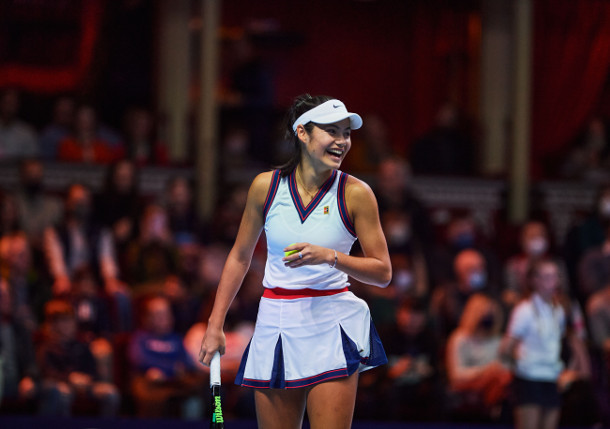
Raducanu: Top Players Get Preferential Treatment

The Brit says it's a bummer to have no practice time on Chatrier. Emma Raducanu

By Chris Oddo | @TheFanChild | Tuesday May 27, 2025

Paris – Emma Raducanu would like more time to get used to playing on Court Philippe-Chatrier ahead of her second-round match with Iga Swiatek at Roland-Garros.

And she’s not exactly thrilled that she isn’t getting the chance.


Raducanu says it is tough to be expected to play her best on Court Philippe-Chatrier when she hasn’t been given the opportunity to practice on the tournament’s fabled showcourt.

“I honestly think it's really difficult, because the tournament don't really help in terms of getting you court time on the bigger courts or on like the match courts, really,” she said on Monday on Court No.8.

Court No.8 has a capacity of 350 people, while the capacious Chatrier holds 15,000.

Raducanu says she feels certain players get more chances to practice on the court, while others get nothing.
“I feel like, I don't know, certain players get preferred treatment,” she said. “It's very different from at the annex [the cluster of practice courts across the street from the site], for example, across the road or other courts to then kind of jump onto Chatrier or jump onto a stadium. It isn't easy. I wish they would give us more opportunities on [Chatrier] or bigger courts, especially if we're going to play on them.”

Raducanu, who is 0-4 lifetime against Swiatek, has never taken a set against the four-time Roland-Garros champion.

She’s looking forward to seeing how she matches up against one of the toughest challenges in women’s tennis.

“I think it's a match for me where I can really test and challenge myself,” she said as she looking ahead to facing the reigning queen of clay. “I think exposure to the top players is great for where I'm at for my development. “I think especially on clay, it's her preferred tournament [and] surface. She's won it four times. It's a match where I can go out and test really just myself and go for my shots, because I know if I just push the ball, I'm probably going to get eaten. I need to, like, hit the ball.

“I'm looking forward to that challenge.”